Marathon Training Shoes: What Kenyan Runners Actually Need
Find the right marathon shoe for Kenya's terrain and climate with expert guidance on cushioning, grip, and durability for serious distance runners.
See everything Jojo Shoes can do for you.
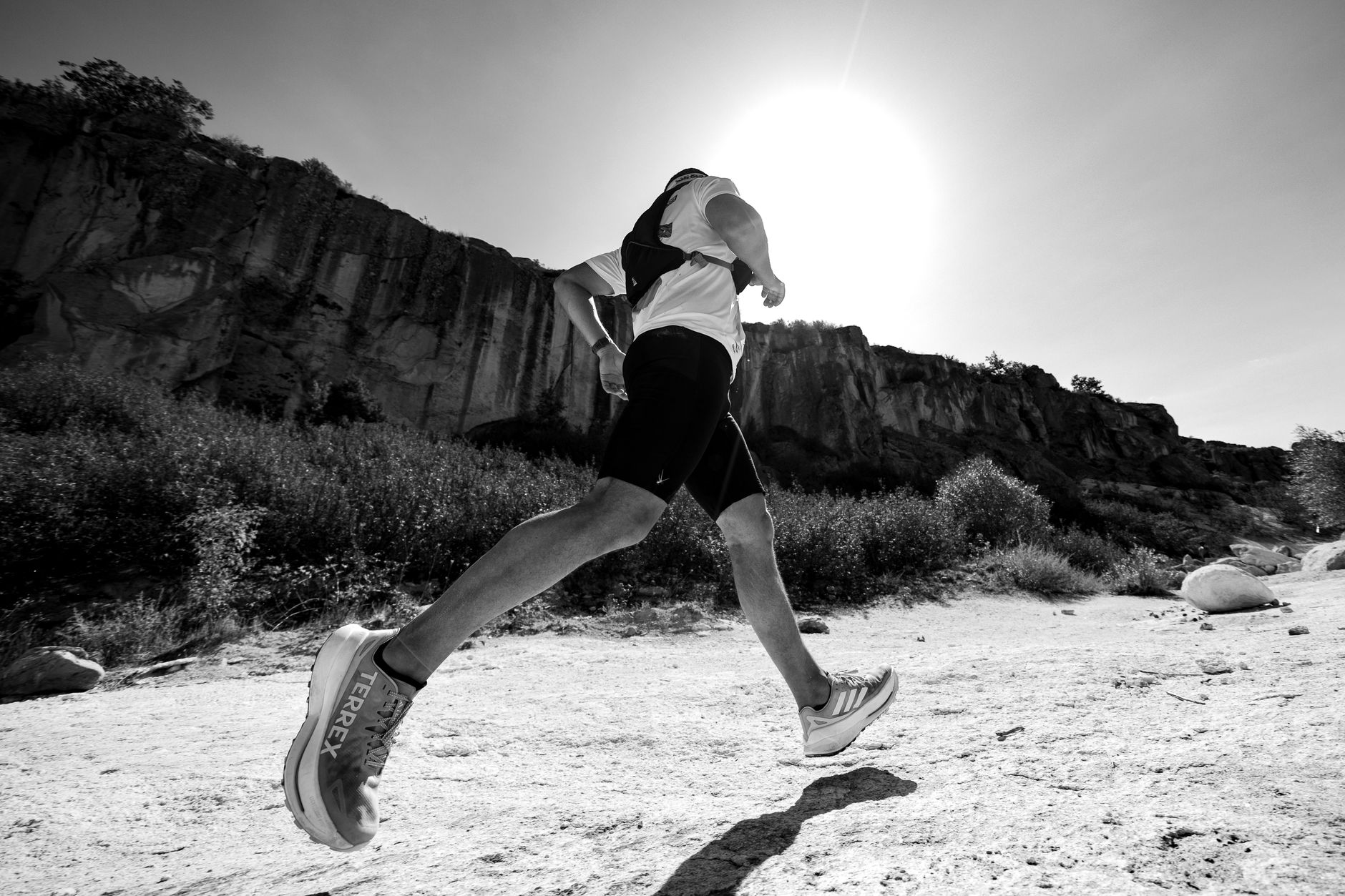
If you have run through Nairobi's Westlands roundabout at 6 a.m., climbed the hills around Ngong, or pounded the tarmac stretch along Thika Road for a Sunday long run, you already know that marathon training in Kenya is its own discipline. The shoes you choose are not a minor detail. They are the piece of equipment that works hardest across every kilometre you log, and getting that choice right can be the difference between crossing a finish line strong and limping through the final ten kilometres.
This article is part of our complete guide: Trending Shoes for Men in Kenya.
Best Running Shoes For Kenyans: Why Marathon Shoes Matter for Kenyan Terrain
Kenya's running landscape is genuinely varied, and that variety punishes a shoe that was designed with only one surface in mind. From the compacted volcanic soil around Iten to the rough tarmac of Nairobi's back roads, your foot strikes a different surface almost every week. A shoe that handles that range needs a well-designed outsole, a midsole that absorbs varied impact, and an upper that holds its shape even when the ground beneath you changes quickly. Ignoring terrain when choosing shoes is one of the most common mistakes recreational marathon runners make. The right shoe makes the terrain a training tool rather than a hazard.
Heat and humidity are facts of life for runners training in Nairobi and the coastal counties. During a 25-kilometre training run in Mombasa, a shoe with a poorly ventilated upper will leave you with soggy socks and soft, blister-prone skin within the first hour. Breathable mesh uppers and moisture-wicking sockliner materials are not luxury features in the Kenyan context. They are practical necessities that protect your foot health across months of heavy training. If a shoe's upper does not allow airflow, the rest of its engineering almost does not matter.
Road quality also shapes what your cushioning needs to do. Many popular running routes around Nairobi, Nakuru, and Eldoret include sections of cracked tarmac, sudden potholes, or gravel edges where the road shoulders off into dirt. A shoe with adequate cushioning absorbs those irregular impacts before they travel up into your knees and hips. Runners who train on smoother surfaces can often manage with lighter cushioning, but the typical Kenyan route demands a little more protection underfoot. Think of cushioning as your shock absorber, tuned for the road you are actually running on.
Long-distance running raises the stakes on every feature, because small inefficiencies compound across 42 kilometres. A shoe that feels only slightly heavy at kilometre five will feel like boots by kilometre thirty-five. Weight and energy return work together: a lighter shoe with a responsive midsole gives each stride a subtle spring that reduces the total muscular effort your legs need to maintain pace. For best running shoes for Kenyans, this combination of light weight and good energy return is one of the most important things to evaluate before buying.
Key Features to Look for in Marathon Shoes
Cushioning technology is the feature most runners research first, and with good reason. EVA foam is affordable and widely used, offering reliable cushioning that suits most training runs without adding unnecessary bulk to the shoe. Gel inserts, used heavily by brands like Asics, absorb impact at specific high-pressure zones. Air cushioning, which Nike has developed extensively, provides a more responsive feel that many runners describe as springy rather than simply soft. At kilometre thirty, what you want is a midsole that still feels alive under your foot rather than compressed and dead.
Midsole stability matters more on Kenyan routes than many training guides acknowledge, because hills and uneven surfaces create lateral forces that flat-road shoes are not always built to handle. A stable midsole keeps your foot from rolling inward or outward on cambered roads or gravel tracks. Runners with neutral gaits can often manage with standard stability, but those who overpronate will notice the difference over a long training block. Look for a shoe with a firm medial post or a structured midsole if your ankles tend to roll on descents.
Outsole grip and durability are closely linked on Kenyan terrain, where you might run on wet tarmac in the morning and a dusty trail in the afternoon during the same training week. A harder rubber compound lasts longer on asphalt but can feel slippery on loose dirt. Carbon rubber patches at high-wear zones, like the heel and the forefoot, extend a shoe's lifespan without sacrificing too much flexibility. Check the outsole pattern on any shoe you consider: a multi-directional lug design handles more surface types than a simple flat outsole.
Lightweight design is not about vanity. Reducing the weight of your shoe by even 50 grams has a measurable effect on leg fatigue across a full marathon. Brands have invested heavily in engineered knit uppers and foam compounds that cut weight without reducing structural integrity. For runners logging serious weekly mileage, a lighter shoe also reduces the metabolic cost of each stride, which means you arrive at the late kilometres of a race with a little more left in the tank. Weight is something worth checking on the specification sheet before you order.
Breathability ties together several of these features because a hot, damp foot loses its mechanical efficiency quickly. An engineered mesh upper with strategically placed overlays allows airflow without sacrificing the structure that holds your foot in place at speed. Moisture management starts at the sockliner and moves outward through the upper, so the best marathon shoes treat the whole foot environment as a system. For Kenyan runners training through the long rains or the dry-season heat, a shoe that manages moisture actively is going to protect your skin and your performance over the full training block.
Best Brands for Marathon Running in Kenya
Nike marathon shoes have a presence in Kenyan running that goes beyond marketing. Several of Kenya's elite athletes have trained and raced in Nike models, which has pushed the brand to develop technology specifically suited to high-volume endurance training. The Pegasus series and the Vomero line offer different cushioning profiles, so you can choose based on whether you prioritise responsiveness or protection. Nike's ZoomX foam, which features in the higher-end models, provides some of the best energy return available in a marathon shoe today. For runners looking at Nike Adidas marathon shoes Kenya, Nike is a strong starting point across a wide range of budgets.
Adidas has invested significantly in understanding how runners with African biomechanics and training habits interact with their shoes. The Adizero and Ultraboost families cover different ends of the marathon training spectrum, with the Adizero leaning toward race-day performance and the Ultraboost offering more cushioning for heavy training weeks. Boost foam, Adidas's proprietary midsole compound, is one of the most temperature-stable cushioning materials available, which matters on a hot Nairobi afternoon when foam compounds in cheaper shoes are already softening. Adidas also tends to size consistently, which reduces the risk of ordering the wrong fit when buying online.
New Balance is a brand that Kenyan runners sometimes overlook, but it deserves serious attention from anyone who needs extra stability or has a wider foot shape. The Fresh Foam series provides excellent cushioning for runners who cover long distances on harder surfaces, and the brand's structured stability models work well for runners who struggle with overpronation on hilly terrain. New Balance also tends to offer a more generous toe box than some competitors, which reduces forefoot compression during the swelling that naturally occurs in the later stages of a long run. If you have had blister problems or toe numbness in other brands, New Balance is worth trying.
Timberland is primarily known for its outdoor and lifestyle boots, but for runners whose training crosses urban and trail terrain regularly, some Timberland trail models offer useful features. The brand's outsoles are built for durability on rough ground, and the construction tends to be robust enough to handle the kind of varied surfaces that Nairobi's training environments throw up. These are not racing shoes, but as a training option for someone who splits time between road running and trail routes, they provide protection and grip that a pure road shoe cannot match. Timberland also stocks well in wider widths, which benefits runners who cannot comfortably fit into standard-width lasts.
How to Train in Your Marathon Shoes Before Race Day
Breaking in a new pair of marathon shoes is a process that requires patience, especially if race day is twelve or more weeks away. Start by wearing the shoes on short runs of five to eight kilometres, allowing the midsole foam to conform to your foot's pressure patterns and the upper to soften at any stiff points. Many runners have made the expensive mistake of running a full marathon in shoes they bought the week before, and the resulting blisters and hotspots are almost guaranteed. A gradual break-in period of four to six weeks gives you confidence that the shoe will perform when it matters most.
Testing your shoes on Nairobi's actual terrain is more valuable than any manufacturer's lab data. Run a session on smooth tarmac, then take the same shoe onto a dirt track or a gravel path, and notice how your foot feels in each situation. The hills around Karen or the routes through Karura Forest will tell you more about a shoe's stability and grip than any online review written by a runner in a different climate. Local testing builds a real understanding of whether the shoe suits your running style on your specific routes.
Monitoring your foot during long weekend runs is one of the most practical things you can do during a training block. After runs of eighteen kilometres or more, check your feet for hotspots, areas of redness, or the early signs of blisters, which are the shoe's way of telling you something is not working. A small hotspot on a twenty-kilometre run becomes a serious blister at kilometre thirty of a race. Address fit problems immediately by adjusting lacing, changing sock thickness, or trying a different size before committing to the shoe for race day.
Replacing your shoes at the right time is a discipline that many recreational runners skip because good shoes are expensive. Most marathon shoes maintain their protective cushioning for between 500 and 800 kilometres, after which the midsole foam has compressed enough to offer noticeably less shock absorption. Running a marathon in a shoe with compressed cushioning puts your joints under the same stress as running in a cheap unstructured shoe. Track your mileage, and plan your purchase so that you arrive at race day with a broken-in pair that still has its cushioning intact.
Budget vs Premium: Making Your Choice
Premium marathon shoes are expensive because the research behind them is expensive, and Kenyan runners benefit from that investment directly. Nike's ZoomX foam and Adidas's Boost compound each took years of material science to develop, and they deliver measurable differences in energy return and cushioning longevity compared to generic foam. A shoe that costs four thousand shillings more than a budget option often lasts significantly longer and provides better joint protection over a heavy training block. When you spread that cost across six months of training, the premium starts to look like value.
Mid-range options from Nike and Adidas occupy a practical sweet spot for most marathon runners in Kenya. Models like the Nike Pegasus or the Adidas Duramo offer solid cushioning, reliable outsoles, and breathable uppers at price points that do not require a major financial stretch. These are not entry-level shoes built with the cheapest available materials. They are purpose-built training shoes that use slightly older versions of the brand's core technology, which is still far ahead of what unbranded alternatives offer. For runners covering 40 to 60 kilometres per week, a mid-range shoe from a major brand is a very reasonable choice.
The cheapest option is genuinely worth avoiding if you are running more than twenty kilometres per week. Injury costs money too, whether that is physiotherapy, time off work, or a race entry fee wasted because your knee gave out in week ten of a training block. The best running shoes for Kenyans are not necessarily the most expensive ones, but they are never the ones built with compressed, low-density foam and a thin outsole. The risk calculation on cheap footwear simply does not favour the runner who is serious about completing a marathon in good health.
Jojo Shoes stocks a range of brands with countrywide delivery, which means you can compare options across price points without being limited to whatever your nearest physical store happens to carry. Browsing the full range before committing gives you a much better sense of what is available at each budget level and lets you make an informed decision rather than a rushed one.
Where to Find the Right Fit Online
Knowing your exact shoe size and gait type before ordering online removes most of the guesswork from buying marathon shoes without trying them on first. Measure your foot length in centimetres at the end of the day when your feet are at their largest, and check that measurement against the brand's size guide, because Nike and Adidas sizing can differ by half a size. If you know you overpronate or have a high arch, note that too, because it narrows your options toward specific models designed to address those characteristics. Ordering with clear information about your foot reduces the chance of receiving a shoe that does not work for you.
Reading reviews from other Kenyan runners about how each model performs locally adds a layer of context that international reviews often miss. A shoe praised for its performance in a cool European climate may behave differently in Nairobi's heat, and a local reviewer who has tested it on Thika Road or the Athi River route will tell you things the manufacturer's product page cannot. Look for reviews that mention the specific conditions you train in, including surface type, heat, and weekly mileage, to get the most relevant feedback before making your choice.
Factoring delivery into your planning is practical and straightforward when you order from Jojo Shoes. Free delivery within Nairobi and affordable countrywide shipping mean that a runner in Kisumu or Mombasa can access the same range as someone based in the city, without having to rely on whatever is stocked locally. Check our full shoe range to see current stock and delivery details before you commit to a purchase. Knowing your delivery timeline lets you plan your order around your training schedule rather than scrambling at the last moment.
Ordering with enough lead time is one of the simplest and most important pieces of advice for any marathon runner shopping online. Give yourself at least six to eight weeks before your target race to receive, break in, and evaluate your shoes through several long training runs. A shoe bought a week before race day has no time to prove itself and no time to be replaced if something goes wrong. Plan your purchase as deliberately as you plan your training programme, and your feet will thank you on race day.
---
Choosing the right marathon shoe is one of the most concrete investments you can make in your running. The terrain, the climate, and the demands of 42 kilometres all point toward the same conclusion: a well-chosen shoe from a trusted brand, broken in properly and replaced on time, protects your body and supports your performance in ways that no amount of willpower can substitute for. At Jojo Shoes, we stock the brands that Kenyan runners actually rely on, with delivery options that reach you wherever you are training. Take your time, know what you need, and choose well.
See everything Jojo Shoes can do for you.
Visit Jojo Shoes →